
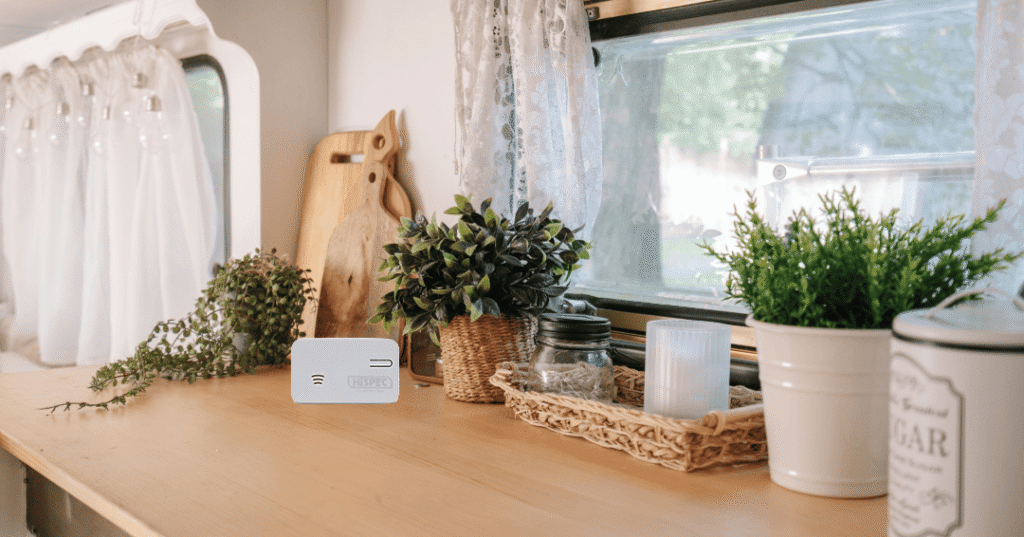
Now spring has sprung and we are heading into warmer weather, people up and down the UK are heading out in leisure accommodation vehicles for weekends away. Make sure to enjoy yourself but ensure you protect yourself, passengers and property from potential hazards.
Leisure vehicles can be a fire risk due to integrated cooking, heating and electrical systems so the risk of Fire and CO exposure can be higher. Ensure to fit a working smoke and Carbon Monoxide alarm for added safety.
Fire Risks in Leisure Vehicles/Homes
Caravans and leisure vehicles are usually built with lighter materials to make transportation and travel easier; and these materials usually don’t have high levels of protection if a fire was to break out. Typically campervans and caravans aren’t used all year round so are not maintained as often, therefore, battery issues, wiring problems and overloaded circuits can be a fire risk so it’s important to regularly inspect your electrical goods before setting off on your travels. Caravans and boats may have additional risks of carbon monoxide ingress through air vents due to the nearby presence of other vehicles, engines, generators or barbecues. Ensure to be alerted to dangerous exposure to Carbon Monoxide and Fires with alarms.

Where to fit alarms
Due to the very different construction methods and sizes of caravans and boats no exact advice on the positioning of carbon monoxide and smoke alarms can be given.
Ceiling placement – It is advised to install your alarm in the middle of the room and 300mm away from light fixtures and walls to prevent dead air space.
Heat alarms – The recommended installation place for heat alarms within these spaces is the kitchen area, refrain from placing near the bathroom as steam can deteriorate the sensor and lead to false activations.
Carbon Monoxide Alarms – Most Carbon Monoxide (CO) alarms are free standing and portable so don’t need installing (check manufactures guidelines) place the carbon alarm wherever there is a fuel burning appliance.
Smoke alarms – Install smoke alarms in the centre of the living area and in the hallway close to sleeping areas so you can be alerted during the night.
Seasonal use – It is essential to test the alarms in caravans especially if they haven’t been used in some time. Test your alarm at least monthly to ensure it maintains its functionality.
Recommended Hispec alarms
·HSA/BC/10 – Battery Operated Carbon Monoxide Detector powered by a 10-year battery
·HSA/BP/10 – Battery Operated Smoke Alarm powered by a 10-year battery
Top Tips for Leisure Vehicle Safety
- Ensure to keep your caravan and campervan well maintained.
- Ensure alarms are tested regularly.
- Store fire safety products such as Fire Extinguishers in your vehicle and learn how to use them.
- When cooking keep the room well-ventilated by opening windows and doors and don’t leave cooking unattended.
- Maintain your fuel burning appliances by checking wiring and clearing dust build-up.
- Don’t store your gas cylinders inside and only change them outside.
Ensure to enjoy your travels this summer by combining reliable alarms and peace of mind. For more information please contact us: customerservices@hispec.co.uk | 01257 262 197