
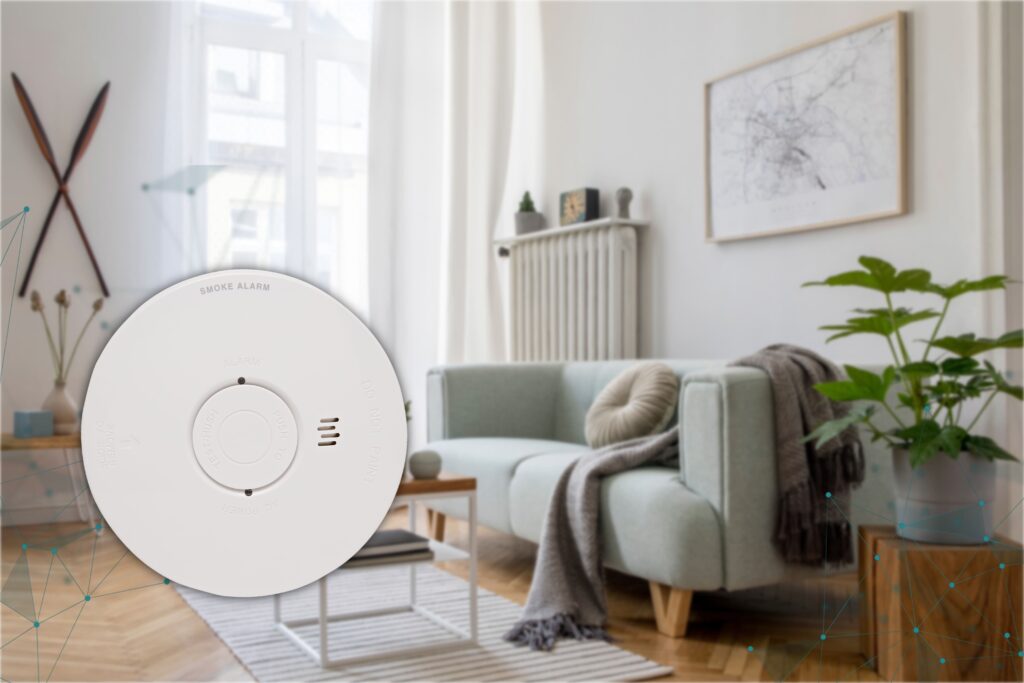
Fire safety in your home is crucial to keep your loved ones safe and prevent your house from being ignited and potentially being destroyed. Peace of mind starts with simple safety steps:
Choosing your smoke alarms
- Every level of your home should have at least one working smoke alarm including main occupying rooms such as the living room, kitchen, and landing.
- Ensure the smoke alarm is reliable and has the relevant safety kitemarks including BSI and UK CA.
- Opt for a 10-year sealed lithium battery as these are the best option available and ensures you don’t have to replace the batteries frequently. Battery backups on mains powered alarms also ensure that the alarm can still operate during power outages.

How to make sure they work
- Ensure to test your alarm at least every month as a minimum to ensure that the alarm is fully operational.
- Remove the dust cover from the alarm if supplied as the sensor will not be able to detect smoke/heat.
- If you have interlinked alarms, ensure that they all go off together when testing to ensure they are connected.
Fitting your alarm
- Refrain from putting a smoke alarm close to the bathroom as steam can falsely set the alarm off. Also avoid putting a smoke detector close to the kitchen, a heat alarm would be recommended in these instances.
- It is best to hire a professional to install the alarms in your house to ensure they are fitted properly, you can also contact your local fire station who can install the alarm within your home.
- The ideal position for an alarm is on the ceiling directly in the centre of a room so that you can hear the alarm throughout your home.
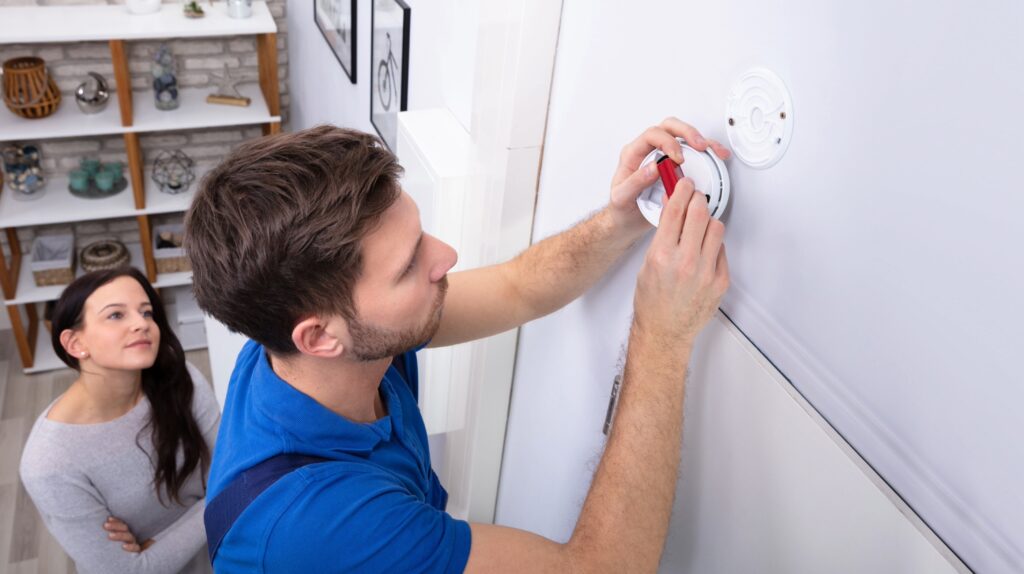
Maintenance
- Ensure to test your alarm regularly and make it a part of your household routine.
- Wipe away dust that can accumulate on the alarm as this can prevent the sounder from going off due to the sensor being blocked.
- Fire extinguishers can also be used to put out fires and are handy to have in your household.
How to prevent fires
Although great fire safety starts with adequate fire detection, now you will learn how to avoid fires in your home.
In the Kitchen
Ensure to take extra care in the kitchen especially when cooking as an average of 49% of house fires start in the kitchen (Salmon Assessors, 2024).
- Avoid cooking when under the influence of alcohol or drugs.
- Don’t leave children in the kitchen unattended especially when cooking on the hob or when the oven is on to keep them safe.
- Always check to see if appliances are turned off when not in use.
- Keep flammable items such as towels away from the cooker and hob to prevent ignition.
- Only buy appliances that are certified as low quality appliances can be a fire hazard if not tested vigorously.
- Take care when cooking with oil.
- Keep your appliances clean as a build up of fat and grease can ignite a fire.

Electrical
Electrical fires can be challenging to put out due to the risk of electric shock and the potential for the fire to rapidly spread. Here is how to avoid electrical fires:
- Don’t overload plug sockets and take care when using extension leads, certain appliances should only use one single plug if they are high powered.
- Refrain from charging electronics overnight and don’t sleep with your phone under your pillow.
- Ensure that the electrical appliance has a European safety mark.
- Damaged wires should be thrown out and do not attempt to patch them up.
- Secure heaters to the wall to prevent them from falling over as they will burn and ignite almost immediately, ensure to turn them off when not in use.
Cigarettes and Candles
- Try not to smoke inside and ensure to put your cigarette out in an ashtray.
- Unplug e-cigarettes once fully charged.
- Keep candles out from the reach of pets and children.
- Always put out candles when you leave the room and make sure, they are completely out at night.
In the event of a fire, get out, stay out and call 999. To browse our full range of fire detection click this link: https://hispec.co.uk/product-category/fire-co-detection/