
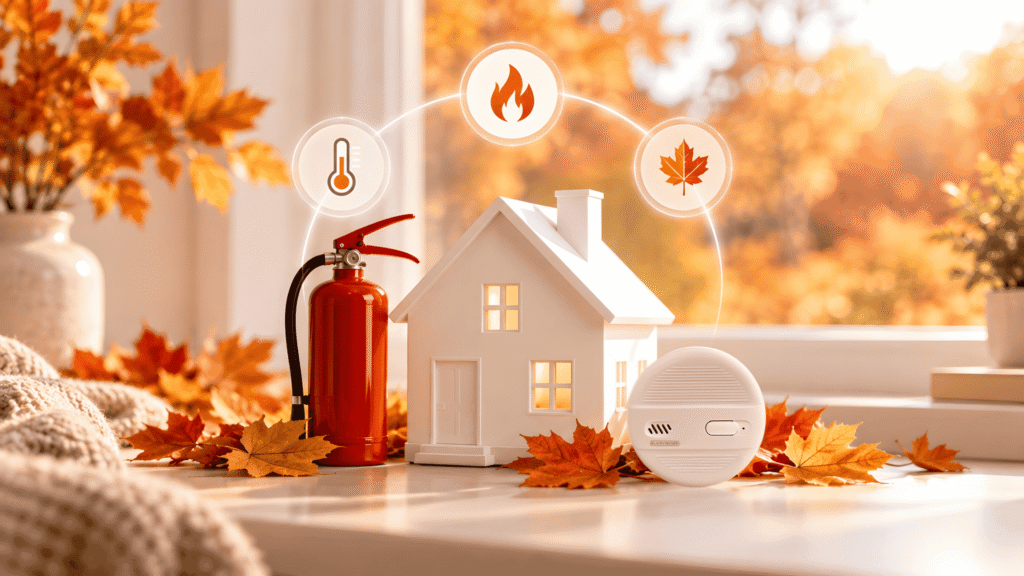
The first signs of autumn usually prompt a familiar routine: the heating goes back on, warmer bedding comes out and evenings move indoors. But while we prepare our homes for colder weather, it is easy to forget a few important safety checks.
Changes in how we use our homes can introduce additional fire and carbon monoxide risks. Heating appliances return to regular use, windows stay closed for longer and candles, portable heaters and seasonal decorations begin to appear.
Before settling into the season, take a few minutes to complete an autumn safety reset.
Start with your heating appliances
Boilers, fires, log burners and other fuel-burning appliances may have seen little use during the warmer months. Before they return to regular use, check that they have been properly maintained and are ready for the colder season.
Boilers and other appliances should be serviced by an appropriately qualified professional in line with the manufacturer’s recommendations. Chimneys, flues and ventilation points should also be kept clear and properly maintained.
Faulty, incorrectly installed or poorly maintained appliances can produce carbon monoxide. Because this gas cannot be seen, smelled or tasted, it may go unnoticed without suitable detection.
Check your carbon monoxide protection
A working carbon monoxide alarm provides an important warning when CO is present in the home.
Check that alarms are installed in the appropriate locations, particularly in rooms containing appliances that burn gas, oil, coal or wood. Always follow the manufacturer’s instructions when positioning an alarm, as its location can affect how effectively it operates.
Use the test button to check each alarm and look for its replacement date. If an alarm is damaged, repeatedly chirping or has reached the end of its working life, do not ignore it.
An alarm should never be treated as a replacement for correctly installed and regularly maintained appliances. Both measures have an important role to play in reducing risk.
Do not assume an installed alarm is a working alarm
Once an alarm has been fitted, it can easily fade into the background. However, its presence alone does not guarantee that it is ready to respond when needed.
Test every smoke, heat and carbon monoxide alarm in your home according to the manufacturer’s instructions. Make sure each unit is free from damage, has not been covered or painted over and remains within its recommended working life.
Never remove batteries or disable an alarm because of unwanted activations. Repeated alarms may indicate that the unit is incorrectly positioned or that a different type of alarm would be more suitable for that location. Seek professional advice if you are unsure.
Consider whether your home has changed
The alarm coverage that suited your home several years ago may no longer reflect how the property is used today.
Think about any changes made since the system was installed. Has the loft been converted? Has an extension been added? Is a former bedroom now used as an office or has a new fuel-burning appliance been fitted?
Different areas of the home can present different risks and may require smoke, heat or carbon monoxide detection. If the property’s layout or use has changed, it may be worth reviewing whether the existing alarm system still provides appropriate coverage.
Look at the seasonal risks returning to your home
Heating is not the only change that autumn brings. Candles, portable heaters and decorative lights often return as the evenings become colder and darker.
Candles should be placed on stable, heat-resistant surfaces and kept away from curtains, decorations, furniture and other combustible materials. Always extinguish them before leaving the room or going to bed. Battery-operated candles can provide a safer alternative, particularly around children, pets and seasonal decorations.
Portable heaters also need space. Keep them away from bedding, clothing, curtains and upholstered furniture and never use them to dry clothes. Check the appliance and its cable for signs of damage before use and do not leave it operating unattended or while you are asleep.
As Halloween and Bonfire Night approach, consider using battery-operated lights inside pumpkins and keep costumes and decorations away from open flames and other heat sources.
Make sure everyone knows what an alarm means
Testing an alarm confirms that it can make a sound, but everyone in the household also needs to know how to respond.
Review your escape plan and make sure the usual route out of the property is clear. Identify an alternative route in case the main exit is blocked and keep door and window keys somewhere accessible.
Children should understand that an alarm requires an immediate response. Practising the escape plan together can help everyone act quickly and confidently in an emergency.
Complete your five-minute autumn safety reset
Before the heating goes back on for the season, take five minutes to:
-Test every smoke, heat and carbon monoxide alarm
-Check the replacement date on each unit
-Look for damage, faults or warning signals
-Confirm that vents, heaters and exits are unobstructed
-Move candles and portable heaters away from combustible materials
-Review the household escape route
-Arrange servicing or professional advice where needed
Autumn safety is not about making major changes all at once. It is about recognising how the season changes the way we use our homes and making sure the right protection remains in place.
A few simple checks now can help you enter the colder months with greater confidence and peace of mind.